Maria Del Mar Sacasa

Linda es Nicaragua


It never matters how many years have gone by between visits or how nonchalant I am upon arrival, home gets under my skin, rushes like a wild river through my veins, pounds like violent love against my sternum.

Familiarity of surroundings combined with bleary vision from an early flight, I hand over my passport at customs, rush out to the car, sit in a salon chair while my hair is pulled and sprayed and coiffed for a dinner party. Twelve hours later, I wake from the frenzied coma and finally emerge and inhale. I’m in the back seat of a car, window down. It is summer and there is an oven-hot breeze blowing, scattering superfine reddish dust, shaking the palms and madroños. I smell gasoline, blinding sun, firewood burning, and sadness.

There is never a pause between that first inward breath and the throat-gripping melancholy that it jump-starts because the flashbacks stampede, gallop, thunder in too quickly and suddenly: the visits in the ’80s when supermarkets were barren with rationing, Sunday mass at twilight with bats darting in through wrought iron-barred windows, feeling trapped in this place that’s furious and tempestuous and sweltering and raging, like a difficult woman who secretly likes to be roughed around.

Once the initial flames die down, the embers burn with profound longing for the coarse landscape with its smoking slumbering volcanoes, deep lagoons of unfathomable depths and explosions of pumice stones, wide open sky with thickly clustered white clouds, and starry inky nights. Birds cry out loud, piercing, and longing, while long-limbed monkeys wail and screech in fastidious alarm from the trees. There is the thunderous roar of the surf and cheap speakers blasting out music you can’t avoid swaying to. Soul, skin, and tempers dampen with perspiration.

A visit to my grandparents’ home, and clumsy moths flutter in my abdomen. The big house is disheveled, but the roses still bloom gaudily in the atrium garden. I walk into the room I used to sleep in on weekend visits, still painted a furious pink that fights the black-and-white speckled ceramic tile floors. The closet doors are pure ‘70s: gold-feathered Formica. I remember the window unit AC, chill, damp, and wheezing. But right now there is only stale air and the ghost of an uncle who slowly withered away after a stroke, here, on this very bed. I stand in place and close the door behind me even though I’m close to suffocating. It’s only a few seconds before I retrace my steps, running away before the haunting begins.

Outside, my grandmother talks about family; the births, the celebrations, the many deaths. She’s matter-of-fact but looks broken and her eyes are dim. My grandfather is smaller than he used to be, but he still lights up when he talks about still being able to see well and keep a steady hand with a scalpel in his hand—he’s due at the hospital shortly.

We swing back and forth on rocking chairs, drinking freshly squeezed mandarin juice, but it does little to soothe the translucent veil of warm salty sweat simmering on my skin.

Print This Post Print This Post

Notes from Nicaragua

I just realized I was sitting on all of these photos from my trip to Nicaragua in early December. Most are iPhone shots, and admittedly not the best quality, but it was go-go-go while there and these were stolen moments, quickly captured.

In this shot I play the role of tourist, camera in hand immediately making vendors think I can be easily swindled. Too bad I know more Nica slang than they do. Tourist or not, the Mercado Popular in Masaya is full of hand-woven hamacas and other artisan products. Hammocks are what I miss the most from home—there’s no more luxurious feeling than falling asleep in its gentle rock, palm trees murmuring with the warm breeze.

There’s a short alley at the market where shoes are made and repaired. Urban legend has it that these cobblers double as dentists. Make sense…tools are similar, a snort of pega will knock you right out.

This trip was all business—my cousin Lucía is getting married in a few weeks and I’m helping with all things food-related. I’m nosy and intrusive, and of course got involved in floral arrangements and other details. Which brings us to this interesting wreath. As we sit at the flower shop, looking at bridal white blossoms and lush greenery, this monster funeral wreath receives its finishing touches. In the glass case behind, colorful teddy bears that will be perched on a less morbid array.

Weary with travel, we look for a pick-me up before heading to dinner. A frosty glass-bottled Coca-Cola, more carbonated than anything you get in the U.S., loaded with cane sugar. The slogan was “la chispa de la vida” and truly, one sip does add spark to your life.

Oh, and while you sip (bottles must be returned to the vendor so they can be collected and refilled), you can buy ice cream, a pastry, and antacid…and try on some shoes. We Nicas are so very practical.

Home at last. We are guided to the palm roofed rancho by the warm glow of a lamp. And a fully stocked bar tended by a waiter.

The next morning, we regret the last seven drinks of rón con Coca. Luckily, the antidote appears, bubbly and brisk: a michelada with iced beer, lime juice, generous dashes of salsa inglesa (Worcestershire), and hot sauce.

More to come…headed back this weekend!

Print This Post Print This Post

Of Christmas Past

I baked, frosted, and bedazzled 100 cookies to decorate a Christmas tree for Woman’s Day TV segment. I continue to find sprinkles embedded in my living room carpet.

Do you know, it takes an awfully long time to settle back in after being away for Christmas? No? Then you must be much more organized than I, although, I truly did putter about like new wind-up doll stocked with fresh batteries writing correspondence and making phone calls, taking on a Mount Everest-esque heap of laundry, sorting bills, picking sprinkles out from the carpet (see photo above), mailing out belated holiday gifts…Don’t look at me like that—I know I was delinquent in my elf duties. The worst of it is, I wrote a whole blog entry about how 2010 was the year when I would send out cards and presents in a timely fashion. Lump of coal in my stocking.

What did you do for the holidays? Lots of presents, clinking bubble-filled crystal, and manageable family brawls, I hope. For me, it was southern California, which was a complete washout. The sun refused to shine in its usual carefree way, the house windows looked like they were weeping. No matter—I got to spend some quality time with my mom in the kitchen*.  We cooked and baked every day, and, while this may seem like a non-vacation, we look forward to our time in the kitchen, and odd ducks that we are, actually enjoy doing the dishes.

And now, the pièce de résistance! Nicas, gather round and take notes, because this is a once-in-a-lifetime opportunity, a very special Christmas gift from me to you. My grandmother’s top-secret family recipe for relleno! My mamamá would surely murder me in my sleep for sharing, but she doesn’t use the internet…Does she?

For those non-compatriots, a brief explanation of Nicaraguan relleno:

Relleno means stuffing, but erase your mental pictures of American bread-cube stuffing and dressing because this version is of an entirely different genus and species. I’ve found no original recipe, no documentation on who made this recipe first, but relleno is a contentious subject to Nicas;  recipes are usually closely guarded and unique to each household.

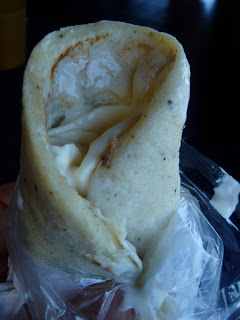
Relleno is made by combining finely chopped pork (I’ve heard of people using chicken, but in my book, that’s sacrilege), panade, and many condiments and stirring everything in a pot for many hours. Mamamá’s recipe is famous and, when she was younger, used to be available for purchase. I remember her standing over a cauldron-like pot in the cement patio in her kitchen in Granada, arduously pushing against a broomstick of a spoon to prevent the bubbling mixture from sticking, beads of sweat wrung out by the deepening furrows in her brow. Granted, she was making at least sixty pounds’ worth, but relleno is labor intensive even in small batches.

Everything but the kitchen sink.

This year, my mom and I started with an insignificant two pounds of pork and it still required the use of two large pots and three hours of stirring. Relleno’s consistency is thick, but spreadable in the manner that rillette or refried beans are. Its color is deep, burnt sienna studded with the green and deep purple of olives, capers, and raisins. The flavor is a balanced blend of sweet, salty, and sour. In some areas of Nicaragua, on Christmas Eve the main event at dinner is a roast hen stuffed with relleno, but my family normally serves it alongside a more gringo roast turkey.


It makes up in flavor what it lacks in looks.

Without further ado, the recipe. ¡Les queda la receta para el año que viene!

RELLENO NAVIDENO CHAMORRO BARILLAS

You will need the largest mixing bowls in your kitchen, and your largest pots. I used a Dutch oven and a 12-inch skillet with straight sides. While the depth of the pots is important, it’s not as important as the surface area. Relleno will start as a pale, soupy mixture, but as it cooks, it will reduce and thicken. The larger the surface area of your pot, the more quickly it the relleno will achieve desired consistency.

This recipe is at its core, my grandmother’s, but in every household, seasonings and garnishes vary. In the ingredients list I call for a base amount, but you are free to add more or less salt, Worcestershire, olives, capers, etc., to taste. If this is your first time with the recipe, I recommend following it closely and, on your second and third tries, making additions and subtractions.

And please, don’t contact me if you choose to defile the recipe with outrageous additions like cumin or choose to start with raw ground pork. No. No. No.

For the base: Cooking the Pork
2 pounds pork loin, cut into 1½-inch chunks
Salt and pepper
1 medium yellow onion, peeled and cut into quarters
1 medium green bell pepper, stemmed, seeded, and cut into quarters
6 garlic cloves, peeled
2 bay leaves

- Generously season the pork with salt and pepper. Place the pork in a Dutch oven or large pot along with onion, bell pepper, garlic, and bay leaves. Fill the pot with enough water to cover (2 to 3 quarts) and bring to a boil over high heat. Reduce heat to medium-low and simmer until the pork is cooked through, about 20 minutes, skimming the surface with a large spoon from time to time.

- With a slotted spoon, transfer pork to a large bowl. Strain the broth into a second large bowl and discard the cooked vegetables.

For the relleno
1 medium yellow onion, peeled and cut into 1-inch pieces
1 medium green bell pepper, stemmed, seeded, and cut into 1-inch pieces
1 medium yellow bell pepper, stemmed, seeded, and cut into 1-inch pieces
8 garlic cloves, peeled
1 (28-ounce) can plum tomatoes
2 loaves white sandwich bread, such as Wonder®, about 2 pounds total, torn into pieces
6 large eggs, well beaten
¼ cup Worcestershire, plus additional for seasoning to taste
½ cup sweet gherkins,  finely chopped
6 tablespoons granulated sugar, plus additional for seasoning to taste
1 pound unsalted butter
Salt
8 ounces raisins
1½ cups pimento stuffed green olives, liquid reserved
1 cup cocktail onions, drained
½ cup capers, drained

- Place the half of the cooked pork, onion pieces, green and yellow bell pepper pieces, garlic cloves, plum tomatoes and their liquid, and ½ cup of reserved broth in a food processor and pulse until finely ground. Transfer to a large bowl and repeat with the remaining half of the pork, vegetables, and an additional ½ cup of reserved broth. Transfer to the large bowl with first batch.

- In a separate large bowl, combine the bread with 8 cups of reserved broth. Mash the mixture with a fork until the bread is completely dissolved. Thoroughly stir in the beaten eggs, Worcestershire sauce, gherkins, and sugar. Add the ground pork mixture and thoroughly combine.

- Divide the butter between two large, deep pots. Melt the butter over medium-high heat. Divide the relleno mixture between the two pots and begin stirring. After about 45 minutes of cooking, the relleno should begin to thicken and acquire a bronze tint. Stir in the raisins, olives, cocktail onions, and capers and continue to stir. Taste and season with salt, Worcestershire, and/or sugar (I like to add some of the reserved olive brine in lieu of salt). Two to three hours of stirring later, your mission is completed.

- Serve relleno as a side at the Christmas table. Leftovers are great on toast or crackers,  or may be frozen in a zipper-lock bag for up to two months.

*I say “quality.” Mom might have other qualifiers to describe the experience. Pobrecita.

Print This Post Print This Post

Bon Appétit – Paris Food

You didn’t think I’d neglected to take pictures of food while I was in Paris, did you?

Eat your heart out.

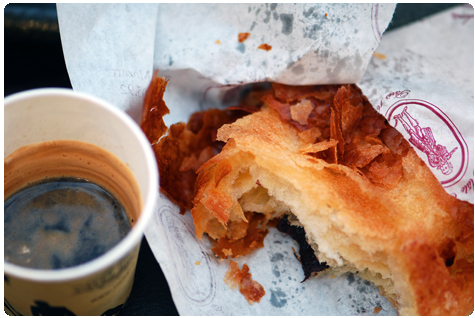
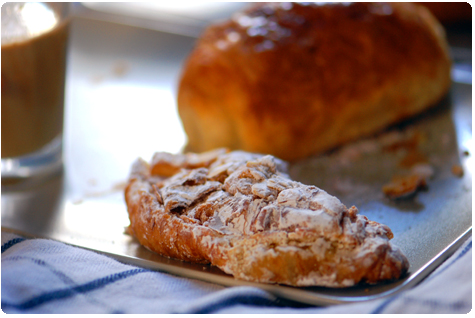
Maybe it was fall’s cinematic sunlight or the giddiness of waking up in Paris, but this was pain au chocolat perfection. A first bite left my lips slippery with melted butter and glossed with warm, bittersweet chocolate. No one was looking, so I allowed myself to lick my equally slicked and stained fingertips. Why thank you, but no, I don’t need a napkin! It was impossibly flaky—so much so that at least one third of it wound up wasted on the sidewalk.

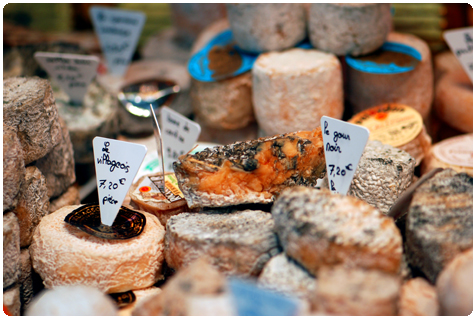
A women I once met told me she thought cheese should be its own food group. I believe the French have already declared it so.

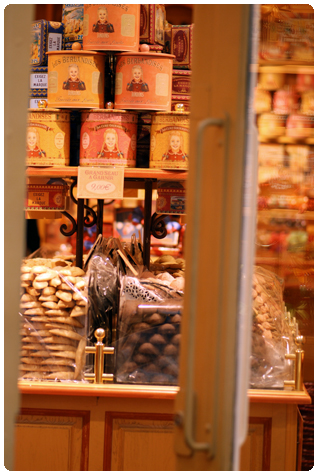
A candy shop in Île Saint-Louis. The Parisian version of me lives on that lovely island and comes into this shop to bathe in its sunset-gold light. The shopkeepers always hand me a cookie to nibble on while I fill a rustling paper bag with sweets. And as I pay, they offer me a chocolate-covered candied orange peel.

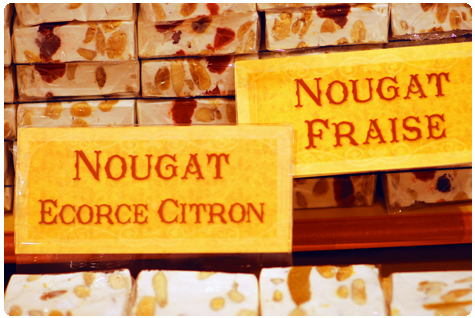
These cellophane-wrapped nougat squares reminded me of swanky marble tiles. Only better, because you can eat them. Hansel and Gretel’s evil witch must have had exactly these in her little house.

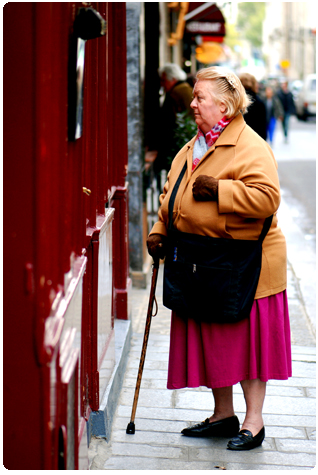
Lunchtime in Paris. A woman peruses the menu, carefully, and with much thought. I like the beginnings of her smile. She must have read a menu item that made her mouth curve pleasantly upwards.

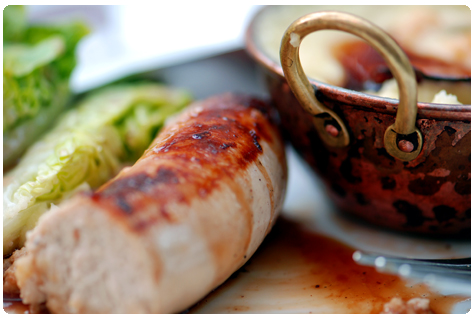
I’m not well-versed in the art of eating alone, but found that I was a quick study, a prodigy even, given the proper location. Pictured here, boudin blanc at Le Comptoir.

Red is my favorite color.

It was quite sunny, but my friend Pauline and I drew the blue velvet shades and pretended it was dreary so we could have a proper breakfast in bed.


Print This Post Print This Post

Ooh La La — Paris Streets

The plane lands. I gather the debris of a lengthy trip—books, magazines, scraps of paper, sweater, scarf—and haltingly make my way down the narrow aircraft hallway. “Au revoir!” and “à bientôt!” are cheerfully sprinkled on each descending passenger.

In a fog, I walk up to the bespectacled man at customs. He looks no-nonsense, but turns out to be chatty. I fumble with answers—after ten days of awkwardly searching for the right words in Italian and French, I have trouble answering in plain English. Outside, the sky is a furious, incandescent fuchsia and the wind, after eight hours of breathing a thick, hot vapor, is a sea urchin, all aggressive needles.  I feel far away. From what, I don’t know, seeing as here is home, here is familiar. Nonetheless, otherness. Days and days later, disorientation still lurks. It’s much darker in the morning than before I left. I can’t sleep, and night drags lazily on its belly towards the dawn.

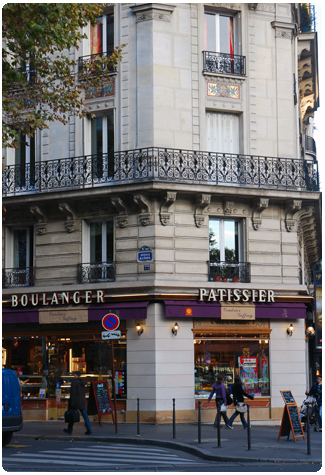
Paris, so often caught on film and between the black-and-white of text and page, is difficult for me to see clearly, without the word wreaths and golden halo. I walked the Jardin du Luxembourg, Trocadéro, Ile Saint-Louis, Notre Dame; all the big names and little dead-end streets, as if sleepwalking. The brisk fall air and blue tinged light dizzying, drugging, releasing dusty moths in between my lungs and sternum. Super-saturated Technicolor, the song had it right, this is life through rose-colored glasses.

A stroll through Paris.

A visit to the Clignancourt, the flea market.

Print This Post Print This Post

La Dolce Vita

Room with a view: Lake Garda, as seen from my bedroom in Padenghe.

The trip was sudden. My father called from Rome to say a friend, Aída, was planning a dinner to draw attention, and hopefully, investments, in Nicaragua. The dinner would take place at Ca’ del Bosco, a winery in the Franciacorta region of Lombardy. The chef planning the dinner was Michelin-starred  Vittorio Fusari, currently  owner of Dispensa Pani e Vini, a lovely, modern restaurant with glass-walled kitchen, where local, and often, neglected, ingredients are showcased. Aída asked if I would plan the menu with Vittorio—I balked, to say the least.  “I’m not a chef,” I explained, but, she pressed and coaxed, and, a day or two later, I was packing my bags.

Padenghe  sul Garda, about a 2-hour drive from the Milan airports, is breathtaking. Lake Garda is encircled by the picturesque town, complete with terracotta-hued lakeside villas and cafés, bobbing sailboats, and snowcapped mountains in the distance. I could see the gently rolling waves from my bedroom, where I found a personalized chef’s jacket laid out on the bed.

The glint of  chef Vittorio’s Michelin stars kept me up that night. In the morning, I was driven to Torino, where Salone del Gusto was taking place. Vittorio, with an abundant mane of silver hair and matching beard, met me at the gates of Salone. We talked about traditional foods of Nicaragua, and within a few minutes, had outlined a  menu that would combine Italian and Nicaraguan ingredients and methods of preparation. Then, it was on to a tour of Salone—I must have eaten at least 5 kilos worth of regional cheeses, prosciuttos, breads, olives, and more cheeses. It was a dream version of a street fair. I love a street fair.

A brief tour of Salone…

Leave the gun, take the cannoli. I was invited to “assaggiare” these cannoli. I went back to the stall 3 times.

Sleeping beauties.

Heirloom calypso beans.


Beautiful, beautiful cheese.

The following are not for the faint of heart. Or vegetarians.


The day of the dinner, I went to Dispensa, with my father’s housekeeper, doña María del Carmen, in tow.  Chef Vittorio wanted to serve tortillas at the dinner, and doña María del Carmen came, mercifully, to help—about 200 tortillas needed to be shaped and cooked right before the dinner. At the restaurant, I was very graciously absorbed into the staff—all boys—and helped prep for the dinner. Halfway through the day, Vittorio sat me down for an incredible lunch. I’m not a food critic, but I can say that every bite tasted of the changing foliage, the earthy breeze, and the surrounding vineyards.

Ca’ del Bosco is filled with art. These blue guardian dogs were my favorites.

Later that afternoon we moved the operation to the Ca’ del Bosco kitchens and started readying for service. Among the appetizers were beef tartare polpettini dusted with pinol, a blend of ground toasted corn kernels, cacao, and spices normally used as a beverage base or as a coating for fried fish.  A first course of risotto with black beans paid homage to Nicaragua’s gallopinto while seared filet of beef was served with a delicately spiced cream sauce that also had pinol. It was inspiring to see how our humble pinol can be made to sing (expect to see a version of the recipe here soon). The hectic pace of plating course after course for 100+ guests was nerve-wracking, but I think I slipped into the groove easily and…dare I say it? Did I experience a tinge of nostalgia? Did I suddenly want to be a line cook?

Chef Vittorio Fusari and I toast the evening.

In all, the visit was dreamy. My gracious hostess Aída plied me with local fare and fabulous sparkling wine, chef Vittorio and his staff welcomed me into his kitchen, and the Ca’ del Bosco folks Ivo and Alfonso let me roam around the vineyard and winery. Grazie mille a tutti!

Fresh pasta with briny tuna, capers, dill, and parsley.

Shrimp in from a seafood stew I ate so voraciously it earned me a reputation for being a “mangiona”— i.e. glutton.

Print This Post Print This Post

Where the Heart Is

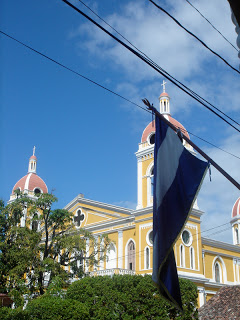
iglesia guadalupeIglesia Guadalupe in Granada, the city where I was born.

Though the Aeropuerto Internacional Augusto César Sandino has boasted jet bridges for several years now, I still expect to descend directly from the airplane onto the tarmac. In the 80s, excited family and friends would crowd together mosh pit-style on a terrace that overlooked the landing strip, everyone calling out and waving signs like crazed fans awaiting a celebrity’s arrival on the red carpet. But they were just waiting for their exiled own, coming home for the holidays.

granada2

Granada by coche, a horse-drawn carriage.

My trips to Nicaragua are bittersweet, especially during Christmas. My passport still marks me a citizen, and I do call it “home” whenever I refer to it, but Nicaragua hasn’t really been home for a very long time. I’ve moved on, but that first sighting of dusty olive green land from the scratched acrylic windows makes my heart cramp. Memories of trips when my family lived in the U.S. and Mexico during the 80s jumble with those from college breaks and the more recent perfunctory visits.  The childhood jaunts were all fun and adventure; I was mesmerized by ox-pulled carts on the main roads and street vendors pouring sodas into plastic bags—mini-udders that dispensed Coca-Cola. But even in the haze of little-kid wonderment, I knew everything was broken, and it made me deeply sad. It’s sadder today. But, there are uniquely beautiful and wow-worthy people and scenes to be found, and I appreciate them all the more.

san juanSan Juan del Sur, the beach town I grew up going to—and now a must-see on tourists’ itineraries.

kids with fishThe new spear fishing technique. We’d gone to the dock and  carefully packed our catch of the day in a large cooler when we spotted these kids. They were much hipper than us.

fish head

Red snapper, the catch of the day: $2/lb.

fishLunch at El Timón, an establishment in San Juan’s “pueblo.” Fresh-caught fish (snapper, in this photo) is coated in pinol, a corn and cacao-based meal, then fried and served with a tomato and onion sauce (salsa criolla), white rice, and plantain tostones.

mercadoTo market, to market…

papayasRipe papayas and watermelons.

starfruitMelocotones y limones (star fruit and limes).virgenLa asunción de la Santísima Vírgen María. The Virgin Mary is a religious and cultural symbol. This image of the assumption is found everywhere, even in markets.

muneco“La quema del viejo” — a local tradition.  These life-size dolls sit on people’s stoops or front yards, awaiting the new year. “El viejo” is stuffed with gunpowder and will be set on fire at midnight to blow out the old year and ring in the new.

sunsetSunset over the bay of Nacascolo.

Print This Post Print This Post

FOODYWOOD, THE SEQUEL

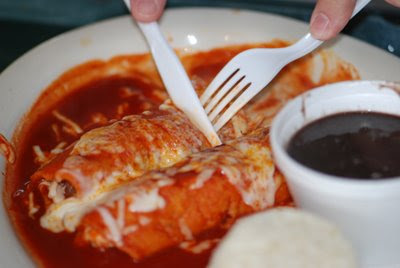
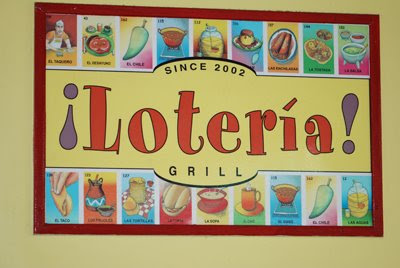
Enchiladas rojas at ¡Lotería!

I like to eat Mexican whenever possible. I lived in D.F. as a child and I have many a fond memory of life and food there. Classmates at Instituto Irlandés, my all-girl, plaid-green-jumper Catholic school, quickly taught me to train my taste buds to accept and in most cases like, a wide array of picante foods. Soon, I too was bringing chile piquín-dusted cucumber slices bathed in lime juice in Hello Kitty Tupperware to recreo and sprinkling the vibrant red dust on oranges and mangos. I also learned to appreciate Mexican counterparts to American candy bars and other sweets: Pulparindo, a chewy tamarind and chile bar; mazapán, a peanut-based marzipan; and Duvalín, vanilla and hazelnut cream that came in tiny packages with a plastic stick for an eating utensil.

I came to know Mexico through its flavors and to understand that it was made up of a vast and complex array of ingredients, textures, and colors that distinguished it from everything else I’d ever eaten. To this day I am shocked when people equate Mexican with Taco Bell or when that fine cuisine is reduced to an overstuffed burrito. Happily, though, there is some authenticity and variety to be found. I had the opportunity to experience Mexico all over again at two spots in LA:


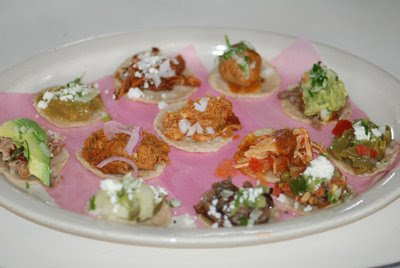
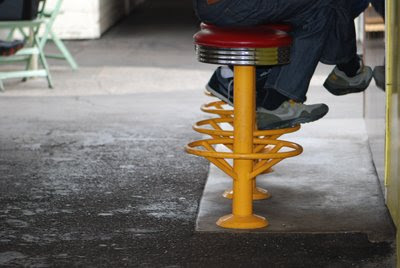
¡Lotería!: Grab a table in the center of the LA Farmer’s Market or hop on a bright red stool and eat right at the counter. Eager to try everything on the menu, I ordered a sampler platter containing miniature versions of the twelve different taco fillings available, including, nopalitos (cactus salad), mole poblano con pollo (chicken with mole sauce), papa con rajas (potatoes with roasted poblano peppers), and chicharrones en salsa verde (pork rinds in tomatillo sauce). I can’t say I had a single favorite, but surprisingly for carnivorous me, the vegetarian nopalitos made a lasting impression.

De todo un poco.

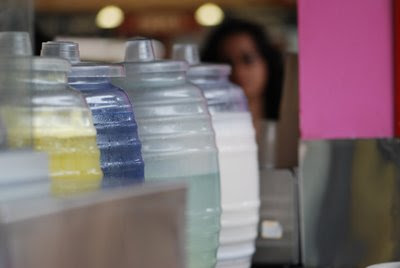
The colorful aguas.

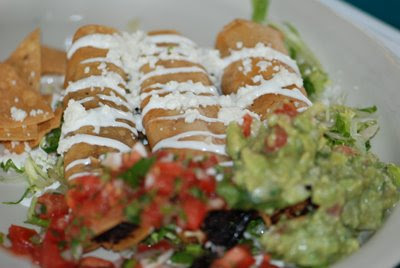
Luckily, I had a few people in tow and was able to taste enchiladas in hot and spicy red chile guajillo sauce that was eagerly mixed into the accompanying rice so as not to waste a drop; crunchy, crispy, corn tortilla tacos; and a mountain of chilaquiles verdes (fried corn tortilla strips sautéed in house-made sauces – either green tomatillo, chile guajillo, or mole) topped with eggs and dressed with queso fresco, crema, chopped onions and cilantro. Oh, and of course, no meal is complete without an agua fresca, fresh fruit drinks in a variety of seasonal flavors. My pick: agua de jamaica, the refreshing, floral, bougainvillea-hued hibiscus tonic.

Crispy tacos.

As fate would have it, owner Jimmy Shaw happened by and we got to talking in English at first until we realized he was Mexican himself. We talked about food, of course, and childhood memories revolving around food…of course. It was a lovely encounter and made us feel like we’d just dined at a dear friend’s home.

Eat right at the counter.

Monte Albán, Mexican eatery with Oaxacan roots, was also a big crowd pleaser. Señor O and I headed there for breakfast with my little brother, and, quite embarrassingly, I was presented with a colorfully sprinkled bun and cup of hot chocolate…because it as Mother’s Day and the hostess took me for my sibling’s mom. I was going to play along, but vanity took over and I just had to clear up that I was not old enough to be this 11-year-old’s mother. Well, technically I am, but still.

…I digress. The food: I had enfrijoladas, with eggs naturally. Enfrijoladas are similar to chilaquiles, only these corn tortilla triangles are smothered in thick black bean sauce. Señor O had a large plate of eggs scrambled with chorizo, and little brother opted for salsa de queso, melted cheese in a pool of spicy tomato sauce, a sticky mess that can be neatly folded into a slender and pliable corn tortilla.

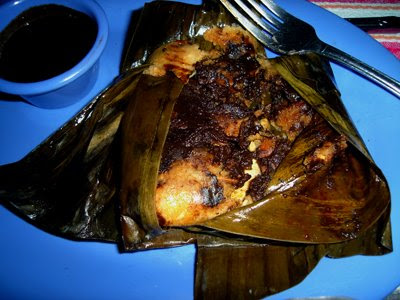
Tamal con mole.

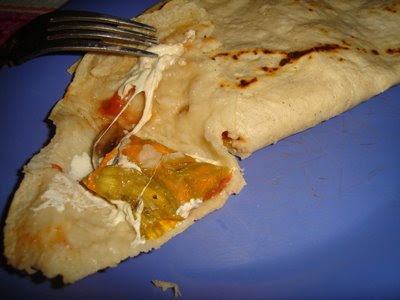
Zucchini blossom quesadilla.

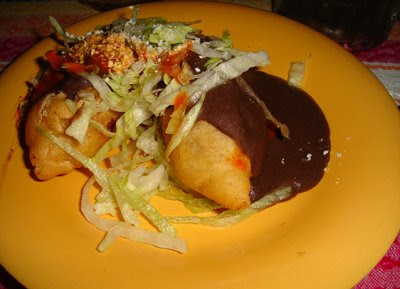
Chorizo and potato molote.

We made a return visit later that very same evening with family members who’d missed out on breakfast and had tamales with black mole, dense and chocolaty, zucchini blossom quesadillas, potato-and-chorizo molotes, deep-fried and crisp, as well as another round of enfrijoladas, this time with a side of cesina, thinly sliced, salted beef. For dessert: ripe plantains, sliced and fried, then topped with condensed milk. As we like to say, barriga llena, corazón contento. (Full belly, happy heart).

Print This Post Print This Post

FOODYWOOD


I was in LA for a few days, and, despite the fact that I spent my nights sleeping in my brother’s bachelor pad from hell – sorry, Charlie, but it’s true: the place was a wreck, a combination opossum refuge and crack den – it was a good time. I absolutely love LA, especially the heretofore unexplored food scene. In the span of a week I had Thai, Korean, Spanish, Mexican, French, Italian, and good ol’ American – a veritable “It’s a Small World” for gluttons. I’m no food critic, but some of my eat-outs must be described.

At the top of my list: Honey Pig Korean BBQ. Up until my journey to Koreatown, my experience with Korean cuisine had been limited to the Momofuku Ssäm and Noodle Bars in New York. Don’t misread – the Momofukus happen to be among my favorite NY spots, but Honey Pig is a whole other animal, and I was completely unprepared for what I encountered there.
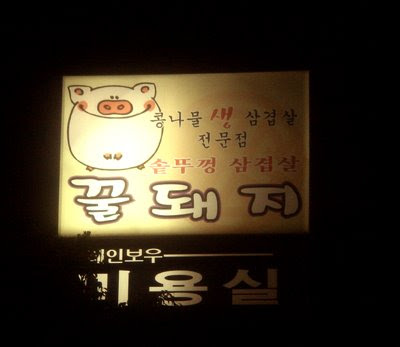
Like a beacon in the night…

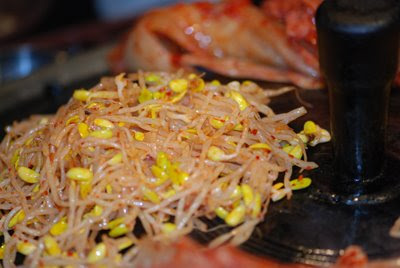
We asked to be seated, at which point the waiter whirled around our appointed table like a dervish-meets-Chinese-plate-balancing-act, dropping little plates and saucers and bowls and then more plates and saucers and bowls with sauces and oils and lettuces (oh my!) all around, till there is not an inch of tabletop visible. In the middle, rising like cupola from a crowded city center, The Inverted Wok Thing. Our awed foursome sat, giggling and gawking as the waiter zeroed in on a tiny dial in the tabletop (Gadzooks! You yourself can control the heat!) and started throwing kimchi-covered cabbage and bean sprouts on the base of Wok Thing.
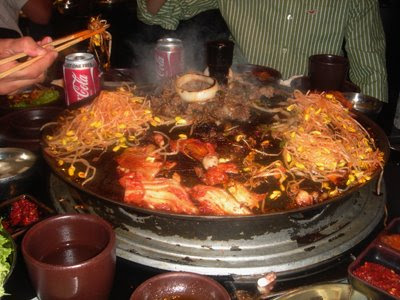
Wok Thing.


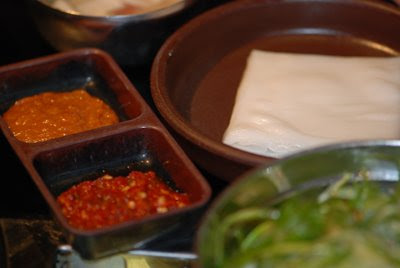
The accoutrements…

We stared, stupidly, not knowing at all what to do with the food. Were we supposed to eat it? How long did we have to wait for it to cook? Were we allowed to touch it? Desperately, we looked around at the other tables attempting to discern the how-tos of KBBQ. I try to make eye contact with any of the passing waiters, but my silent SOS went unnoticed. I flailed my arms and a harried-looking man finally come over. “Uh, I’m sorry, excuse me,” I muttered, unintelligibly and in near-whisper, “Umm, we’re, like, new to this whole BBQ thing,” nervous giggle, “umm, uhh, how do we order?” More vexed looks from the waiter who instructed in a few terse fragments to order four portions of pork belly and one of beef. Now, novice though I was, I thought four portions of pork belly sounded a bit piggish, so I ordered two and one sliced beef. The waiter scurried away.

I’d forgotten to order drinks, so once again, I started casting frantic looks at the wait staff while they continued to ignore me. I began to feel unwelcome, out of place. I hung my head, pouting, and that’s when I realized I was not being ignored; I was just not following protocol: there was a doorbell on my table, hidden under a tiny bowl of pungent red sauce. One is meant to press down on it if and when one needs service. I pushed down, and, wouldn’t you know it, my finger was still on the button when someone materialized at my side. Mercifully, this lady was kind and took pity on us lost sheep. She started snipping the cabbage into bite-size pieces with the aid of slender tongs and shears, and piled them up on the highest part of the dome. “OOOhhhhh,” we mouthed. Next, she lay the pork belly on the wok and it started to sizzle. Once cooked, she, with a deft hand, natch, picked up a piece with a pair of shiny metal chopsticks and quickly dipped it in one of the small bowls, this one containing sesame oil, salt and pepper. The now-seasoned belly, some cabbage, bean sprouts, and thinly sliced green onion were piled on a large and crisp lettuce leaf, which she wrapped. We understood! We got it! We could finally eat!

We were congratulating ourselves on our powers of international comprehension until we started trying to imitate her maneuvers. Turns out metal chopsticks are not for neophytes– they’re slippery and food kept dropping on the way to the plate. We longed for forks, but were too embarrassed to ask. We would eat with slippery sticks even if it took us hours. Someone spotted wooden ones though, and once we had those in hand, things went rather smoothly.

We’d eaten through most of our pork belly and were feeling pretty full when a waiter ran by and without even glancing at us tossed an octopus tentacle on Wok Thing. “We didn’t ask for this!” we yelped, but he only said, “It’s free!” and continued on his way. Meanwhile, another waiter restocked our cabbage and sprouts. We began to get nervous every time someone neared the table, worried more food would appear unannounced. Besides, we still had a mound of thinly sliced beef waiting to be cooked.
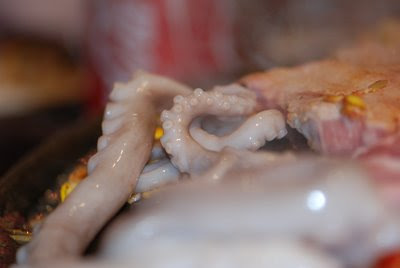
Random tentacle.

After the deliciousness of pork belly, I worried the beef would be a letdown. But it was actually my favorite. Our kindly waitress plopped it on the heat and said, “Very delicious with rice.” I just nodded, defeated, and heaved a deep sigh. I would just have to create more space for the rice. It was orange, and in a bowl, mixed with bits of lettuce and seaweed. She plopped it on top of the beef and started raking up the remaining cabbage and sprouts, mixing it all together. It was my favorite part of the meal. Everything had just enough spice and salt, and at the base of it all, a gentle sweetness that gently played with the underlying heat. I’ve added Korean BBQ to the list of foods I crave, and wish I could install a Wok Thing at my table – it’s one-pot cooking at its best.
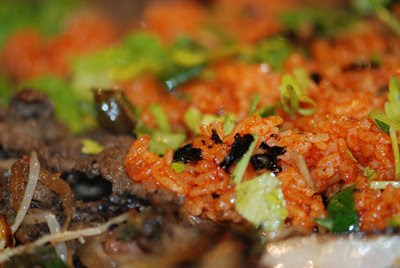
Very delicious with rice.

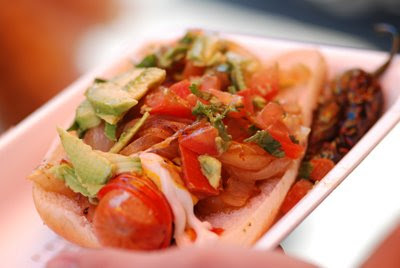
Next up: BACON-WRAPPED HOT DOGS. Months ago, New York Magazine wrote about Crif Dogs, an East Village spot selling deep-fired wieners. Apparently, some genius there decided to give David Chang (creator/chef of the above-mentioned Momofukus) a namesake dog and thus came about the bacon-wrapped-deep-fried-kimchi-topped-hot-dog. I haven’t had the chance to sample this delightful monstrosity, but have spent ample time drooling over its photo. How happy was I then to learn that you can get a bacon-wrapped hot dog in LA? Naturally, I had to have one. Little brother and cute girlfriend took me downtown where we walked through blocks of knock-off bags and tight, neon-colored clothes looking for a… let’s say artisanal hot dog cart. Cute GF instructed us to bypass brick-and-mortar stands because what we wanted was true-blue street food. For a while it looked like it wasn’t going to happen for us and that all we were going to get out of this trip were some snazzy $4 “designer” shades, when we saw (and smelled!) it: a teeny vehicle, no bigger than a golf cart, equipped with a glassed-in flattop and Coleman cooler stocked with Jarritos – Mexican soda pop – and a bowl of coarsely chopped avocado and pico de gallo.
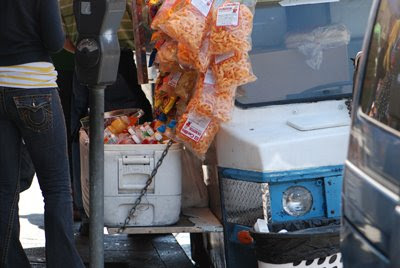
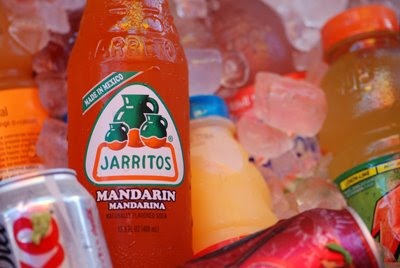

The bacon dogs sizzled alongside sliced onions, green peppers, and jalapeños. I’m sorry Gray’s Papaya, but you’ve been dethroned! The vendor tucked the sausage into a bun and drizzled it with yellow mustard, ketchup, and mayo (!), then topped it with everything in his reach, including the chunky guacamole. It was absolute bliss, and 100% worth the gut-wrenching heartburn that followed.
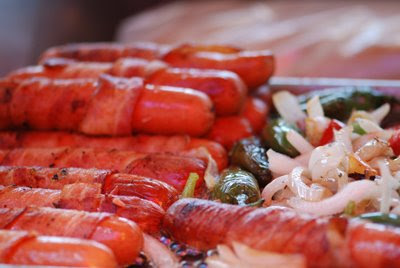

On a sad note, it seems bacon-wrapped hot dog purveyors are being persecuted by the health department. It’s an outrage! Check out Drew Carey’s inspired report on Reason.tv. Potentially harmful food? Puh-lease. Let’s not get started on the Golden Arches, et al.
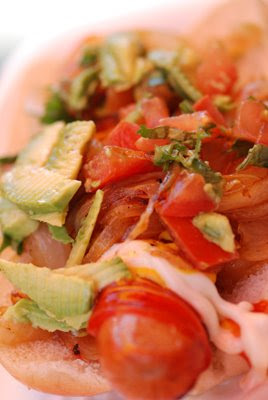
Save the dogs!

More mouth-watering to come,

HH&F

Print This Post Print This Post

FRUSTRATED IN FLORIDA

A mere 24 hours after alighting in Boston I flew down to Florida to visit my mom and little brother. Adventurous bird that I am, I took the subway – err, “T,” as they call it here – to the airport. Paranoid about being late, I left super-early, only to arrive at my gate a mere hour after I left home. I was thus, super-duper early for my flight. And then, of course, it was delayed. Twice.

Finally, my plane landed just around midnight. It seems that down there in the Land of Disney not only Cinderella’s coach turns into a pumpkin at 12 o’clock, but the Turnpike, too. Finding the highway closed, we took the scenic route home. We drove past several pawnshops, the usual fast food joints, “gentlemen’s” clubs, more pawnshops, and then…a Nicaraguan fritanga and food shop. Was this a mirage? Had those eight hours at the airport addled my brain? No, my mother’s husband assured me, it was really there. In fact, we could go there when it was actually open.

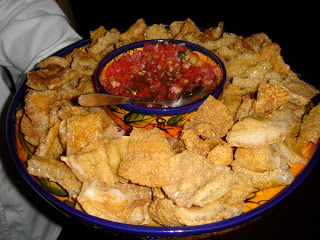
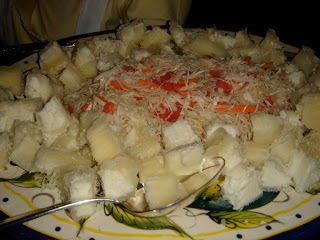
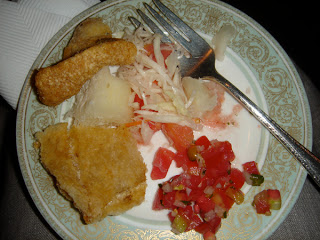
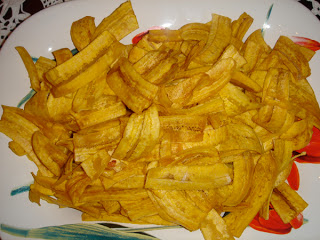
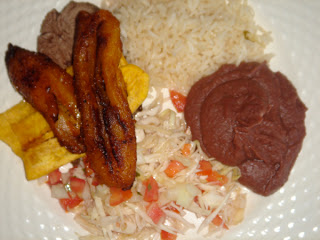
That night I went to bed dreaming of what I would order: tajadas (fried plantains) and maduros (fried ripe plantains), fried cheese, chorizo, carne asada, cerdo adobado (seasoned and sautéed pork cubes) and ensaladita (a slaw of sorts, made with shredded cabbage and diced tomatoes moistened with vinegar)… These things are all easily made at home, but it was the novelty, the thrill of finding this quaint little spot in the hyper-commercialized strip that is the not-so-aptly-named Orange Blossom Trail was what was really fueling my appetite.

The field trip was pushed back to Sunday morning, because yours truly was forced to attend a few sessions with The Porcelain God. All notions I had of eating fried things were completely erased, but a ravaged stomach had not weakened my resolve to visit the fritanga.

It must be noted that the Fritanga Santa Bárbara is in the same lot as the Topp Clazz gas station, and that such a grand title (and spelling!) sent me into a rapture because it was just what you’d find on the side of the road in Nicaragua. Spirit soaring like a helium balloon, I skipped into Santa Bárbara only to be met with…blaring Mexican music. And ogling from the patrons.


The air slowly and steadily started leaving the balloon version of me. I tried to be casual about the staring men, but I could feel their heavy stares. I wanted to identify myself as a fellow Nicaraguan and almost yelped out “Soy nica!”, but decided they wouldn’t care because they were about as Nica as the Salvadoran cookies and Cuban sugarcane juice they had for sale there. It was a sham! Though I really wanted to take pictures because there were some interesting products from Central American countries that also exist in Nicaragua, like jarred jocotes (the label called these plums, but I think they’re more akin to olives) and nancites (yellow cherries? I think not! These little yellow fruits are stinky, like dirty belly buttons!) but I decided against pulling out the camera because I was worried there would be trouble.

Now, to be fair, I Googled Fritanga Santa Bárbara and found one or two reviews; it seems that the regulars find the atmosphere welcoming and the food appetizing. Unfortunately, I was met with a less than warm welcome and the food I spied behind a glass case was not what I’m used to. There were canned mixed vegetables in some dreadful red sauce! So my apologies to the proprietors of Santa Bárbara, but, this is my blog and I am going to tell it like it is.

HHF

P.S.
There is a great fritanga in Miami (three locations!), Fritanga Monimbó (www.fritanga.com), that I eat at every time I’m in town that is wonderful. The people are friendly, the food is delicious, and they sell my favorite soda, Milca — so bright red and sugary that I’m positive Willy Wonka invented it.

Print This Post Print This Post