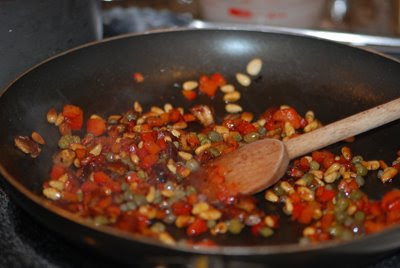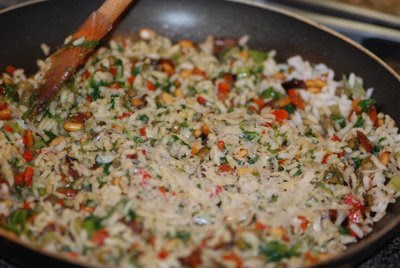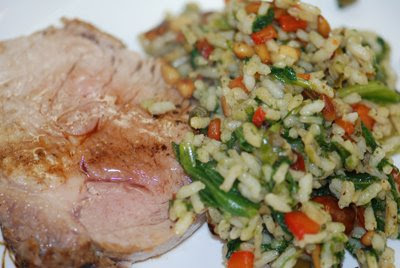

Maria Del Mar Sacasa

Potato Salad: A Makeover

Summer special.

Every year I decide I’m going to incorporate more vegetables into my diet. Every year I fail. It’s no wonder that my cholesterol has reached levels that a tire-waisted, booze chugging, take-out-food-every-night, 50+ male would be shocked by.  There was a time when, in addition to and in between constant tastings at America’s Test Kitchen, I would eat on average 2 dozen large eggs and 1 pound of bacon (a modest estimate) per week. Let’s not talk about how much butter I was consuming.

Chronic heartburn and a constant feeling of being smothered by a large pillow did nothing to stop me. I kept eating. I ate more than my husband. I over-ordered at restaurants. I made male dinner companions look like sissies.

I still indulge in many of these fine, ladylike activities, however, I’ve cut back on the bacon, the Texas-sized portions of fatty steak, and the bi-weekly 2:00am slices of Philly cheesesteak-topped pizza, namely because I’ve noticed my youthful metabolism is no longer as vigorous.

I have, at long last, started cooking more vegetables. And I actually like it. Honest to goodness, there are nights when I have no animal protein and I’m not grinding my teeth afterwards, craving a hunk of meat. This is not to say that I’ve stopped being a carnivore—let’s not be hypocrites here—but it is nice to round out my weekly meals.

This salad, many of you will probably point out, doesn’t really count as salad because it’s full of corn and potatoes – both starchy. But c’mon, cut me some slack. I’ve still got my veggie training wheels on.

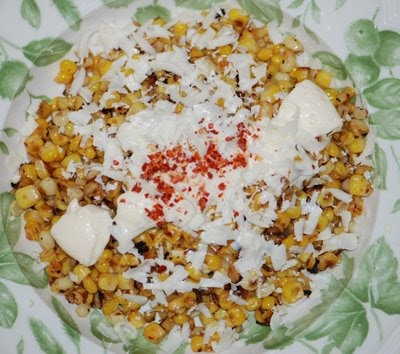
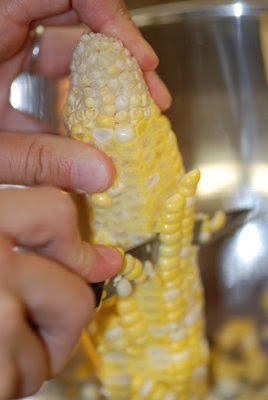
This is a charred corn and potato salad that is perfectly suited for summer. It changes up the usual over-mayonnaised potato salad and also takes the mess out of eating corn on the cob. The kernels are scraped off the cob and toasted in a skillet until dark and spotty black—no need for a grill here. While the smell of movie theatre popcorn drifts up from the pan, diced waxy potatoes get a jump-start on cooking in a plastic-wrapped bowl in the microwave. A quick sautée with garlic slices and these get a bold boost.

Flavored simply but boldly with freshly-squeezed lime juice, cilantro, and hot sauce (I’m on a Cholula kick at the moment), this turns out to be a healthier version of deli counter potato salad: only 1 tablespoon of the stuff is needed to add velvety richness to this dish.  Fresh tomatoes bring an extra hint of summer to this salad that can be served with a green side salad for a completely vegetarian dinner or, what the hell, pair it with a good steak. Extra rare.

TOASTED CORN AND POTATO SALAD

Equipment: large microwave-safe bowl, plastic wrap, microwave, large skillet
Active time: 30 minutes
Total time: 3 hours
Serves 4 to 6 as a side dish

1 pound waxy potatoes, peeled and cut into ¼-inch dice
4 garlic cloves, thinly sliced
3 tablespoons olive oil
4 ears corn, shucked, kernels scraped off
1 tablespoon hot sauce hot sauce
1 tablespoon mayonnaise
4 tomatoes, cored, seeded, and coarsely chopped
3/4 cup cilantro leaves, coarsely chopped
2 tablespoons freshly-squeezed lime juice
Salt and pepper

- Place potatoes and garlic in microwave-safe bowl. Toss with 2 tablespoons olive oil. Cover with plastic wrap and microwave until tender, tossing halfway through without removing the plastic, 4 to 5 minutes.

- Meanwhile, heat additional 1 tablespoon oil in large skillet over medium-high heat until shimmering. Add corn kernels and cook, stirring occasionally, until dark golden brown, 7 to 10 minutes. Transfer corn to large bowl.

- Add potatoes and garlic to now empty skillet and cook until golden, stirring occasionally, about 5 minutes. Transfer to bowl with potatoes.

- Stir hot sauce and mayonnaise into potato-corn mixture. Stir in tomatoes and lime juice, and season to taste with salt and pepper. Serve at room temperature.

- Salad can be made 1 day in advance; refrigerate in airtight container and bring to room temperature prior to serving. Re-season if necessary.

Print This Post Print This Post

Shameless Self-Promotion

A bit of shameless self-promotion to begin the new year. Clearly my resolution to be more humble has gone out the window along with my promise to wake up at 5:30am and head for the gym (in my defense, I suffered an odd neck spasm that even 12 Advil a day hasn’t completely alleviated).

The proud moment, this lunch lady bit on one of my favorite blogs, Oh Joy!

Click here for the gory details on what this lady lunches on: http://ohjoy.blogs.com/my_weblog/

I’ve unfortunately never gotten around to writing down the recipe for roasted butternut squash and apples seen in the photo, but I think it goes roughly like this:

FALL HARVEST SANDWICH WITH ROASTED BUTTERNUT SQUASH, APPLES, AND STILTON

Equipment: large rimmed baking sheet, foil, serrated knife, vegetable peeler, metal spoon, cooling rack

1 medium butternut squash
2 to 3 firm-fleshed apples, such as Granny Smith or Gala
Olive oil
3 tablespoons packed light brown sugar
2 teaspoons finely grated zest and 1 tablespoon juice from 2 lemons
Salt
Aleppo pepper or red pepper flakes
1 ounces stilton
Crusty bread of your choice
Arugula (optional)

- Adjust oven rack to middle position and preheat oven to 425°F. Line large rimmed baking sheet with foil.

- With a serrated knife, trim off about 1 inch from top and bottom of squash. Stand the squash up, and peel with a vegetable peeler. Be sure you’ve removed enough to see the bright orange flesh of the squash.

- Cut the squash where it curves, then cut that rounded piece in half. With a metal spoon, scoop out the seeds and discard.

- Slice squash into ¼-inch slices and arrange in single layer on prepared baking sheet.

- Peel, core (a metal 1-teaspoon measure works wonderfully), and cut apples into 8 wedges; add to baking sheet.

- Drizzle squash and apples generously with olive oil, then sprinkle with brown sugar and lemon zest. Season generously with salt and Aleppo pepper to taste. Toss everything together, rubbing with fingers to ensure even seasoning and coating. Arrange in single layer.

- Roast until vegetables are tender and slightly charred, 35 to 45 minutes.

- Transfer baking sheet to cooling rack and cool to room temperature. Adjust seasoning and add lemon juice.

- To assemble sandwich, slice crusty bread, drizzle crumb with olive oil, and toast if desired. Pile bread with squash and apples, crumble Stilton over everything, and tuck in arugula. Enjoy!


Print This Post Print This Post

Something Naughty

Admittedly, I am not a very enthusiastic cookie baker. I don’t mind pulling cookies out of the oven halfway through baking to carefully apply chocolate chips with tweezers so they look picture perfect, but that’s strictly for work. For fun, I’d much rather do away with the scooping, rolling, cutting,  decorating, and tweezing.

Enter these bar cookies. They’re actually the first recipe I ever developed at Cook’s Country Magazine, and probably one of my favorite. The base is a nut-speckled, buttery shortbread; the center a gooey pecan-pie-like blanket; and the top, a crisp, caramelized, crunchy crust of coconut.

They were originally titled “Dream Bars,” however after six batches and incessant eating, their highly addictive nature demands to be put in the category of illegal drugs, hence the “crack” in the title.

I’m off to bake another batch now. Wrap them up in cellophane and festive ribbons and ship off to friends and family!

DREAMY CRACK BARS
(Originally published in Cook’s Country, Apr/May 2009)

Equipment: 13- by 9-inch baking pan, heavy-duty foil, food processor, cooling rack, mixing bowls, whisk

Notes:
To toast the nuts, arrange pecans in single layer on baking sheet. Bake in center rack in preheated 350°F oven until fragrant and golden, 7 to 10 minutes, shaking pan halfway through baking to redistribute pecans. Transfer baking sheet to cooling rack and cool pecans completely before chopping.

For the Crust
Cooking spray
2 cups all-purpose or whole wheat flour
¾ cup packed dark brown sugar
½ cup pecans
¼ teaspoon salt
10 tablespoons (1 ¼ sticks) unsalted butter, cut into ½-inch pieces and chilled

For the Topping
1 ½ cups sweetened shredded coconut
1 (15-ounce) can cream of coconut
2 large eggs, at room temperature
¾ cup packed dark brown sugar
2 tablespoons all-purpose flour
1 ½ teaspoons baking powder
1 teaspoon pure vanilla extract
½ teaspoon salt
1 cup pecans, toasted and coarsely chopped (See Notes)

For the crust: Adjust oven rack to middle position and heat oven to 350°F. Line 13- by 9-inch baking pan with heavy-duty foil lengthwise with one sheet, then crosswise with a second sheet to create a sling; coat with baking spray.

Process flour, brown sugar, pecans, and salt in food processor until pecans are coarsely ground. Add butter and pulse until mixture resembles coarse meal. Press mixture firmly into prepared baking pan. Bake until golden brown, about 20 minutes. Cool on wire rack 20 minutes.

For the topping: Stir together shredded coconut and cream of coconut in bowl. In separate bowl, whisk eggs, brown sugar, flour, baking powder, vanilla, and salt until smooth. Stir in pecans, then spread filling over cooled crust. Dollop heaping teaspoons of coconut mixture over filling, then spread into as even a layer as possible with rubber spatula or back of spoon (it will be patchy).

Bake until topping is deep golden brown, 35 to 40 minutes. Cool in pan 20 minutes, then, use excess foil to pull out onto wire rack. Cool completely, about 2 hours.

Once cooled, remove foil and cut into 24 pieces. (Bars can be refrigerated in airtight container for 5 days.)

Print This Post Print This Post

Día de los Muertos

“¿Me dá para mi calaverita?”

Mexico and several other Latin American countries honor the dead today by celebrating día de los muertos, Day of the Dead. Children will knock on doors and ask for money or food, families will festively decorate the graves of their loved ones, and this curious pan de muerto will be baked and shared.

Pan de muerto is a sweet, soft bread, coated with sugar and perfumed with orange blossom water. During its preparation, part of the dough is reserved and used to decorate the loaves with shapes echoing those of human bones. Different versions exist, with breads showcasing flora, fauna, and mythical creatures as décor. Even if you won’t be rapping your knuckles on stranger’s doors on behalf of your calaverita, this is a festive and beautiful bread that’s worth trying.

For the recipe, visit Serious Sweets .

Print This Post Print This Post

Jamming

I was completely enchanted by these Concord grapes a few weeks ago when I visited the greenmarket by Lincoln Square. They were deep, midnight violet hiding under a gossamer bloom and intensely perfumed. The strong scent of sheer purple was discernible from a distance and provoked flashes of childhood’s gloppy grape jelly, drippy grape popsicles, and intoxicating grape juice.

The grapes’ velvety jackets are easily slipped off to reveal chubby, translucent green flesh with rather large, crunchy seeds. I usually chew right through these, but while testing this week’s Concord Grape Cake for Serious Sweets I found that they created too much of a distraction. In that recipe, they are removed, leaving you nothing but tender cake mottled with small explosions of grape and a thick topcoat of made-from-scratch jam.

Print This Post Print This Post

Lost and Found

In its original tongue, French toast is pain perdu, “lost bread.” It should be “found bread” or “saved bread” I think, as what would have been tossed out, discarded, inedible, lost bread, too stale and unpalatable to serve even with a large knob of fresh butter, is saved with the addition of staple kitchen ingredients.

French toast is made by dipping stale slices of bread in a batter of eggs and milk, sometimes enhanced with ground cinnamon, vanilla extract, sugar, etc. More exaggerated versions add cereal and nut coatings, cream cheese and fruit fillings, and anything else within arm’s reach that may appeal to a mouthful of sweet teeth.

Note that the whole point of French toast is to use stale bread, but, thanks to the modern-day use of preservatives, supermarket sliced bread can endure an inordinately long period of time. Though it might be a bit more difficult to have bread that’s wasting away in your pantry, do stay away from the fluffy stuff; it is much too soft and overly absorbent, which will produce a wet, soggy, slippery, slimy breakfast.

Even with bread on the brink of becoming lost, I’ve been served many plates of swampy French toast. If you enjoy chewing on waterlogged sponges, don’t make the following recipe. This is a non-recipe of sorts, but basic and self-explanatory, so you should have no trouble. My special trick — aside from dry bread slices from a sturdy loaf — is to generously slather the slices with cinnamon-sugar butter on both sides prior to giving them a brief dip in egg batter. French toast with a thin, fried coating that’s also caramelized and cinnamon-scented. What once was lost, is now found.

CRUNCHY FRENCH TOAST
Serves 2

Equipment: cutting board, serrated knife, large mixing bowl, whisk, 12-inch nonstick skillet or griddle, spatula
Active time: 15 minutes
Total time: 30 minutes

Notes: Use only sturdy, stale bread, such as Pullman loaf, boule, ciabatta, or baguette. Avoid sliced supermarket breads.
Recipe can be easily multiplied.

8 to 10 pieces stale ciabatta bread, sliced into ¾ inch slices (See Notes)
5 tablespoons unsalted butter, softened
2 to 3 tablespoons sugar
1 teaspoon cinnamon (or more to taste)
1/8 teaspoon salt
2 large eggs, at room temperature
¼ cup milk
1 teaspoon pure vanilla extract
1 teaspoon finely grated orange zest (optional)
Syrup or honey for serving (optional)

- Combine 4 tablespoons butter, sugar, cinnamon, and salt in small bowl. Spread each slice of bread on both sides with cinnamon-sugar butter.

- In large bowl, whisk together eggs, milk, vanilla, and optional zest.

- Melt about ½ of the remaining tablespoon butter in large nonstick skillet or griddle over medium heat. Briefly dip as many slices of bread as will fit comfortably on the skillet (do not overcrowd).

- Cook toast until browned and caramelized, 2 to 4 minutes per side.

- Serve immediately, with syrup if desired.

Print This Post Print This Post

Boxed In

I moved back to New York a little over a week ago and in that short time have experienced the whip of Mother Nature’s wrath: first, an earthquake, and now a hurricane. I wouldn’t be at all surprised if Godzilla and King Kong made cameos next.

Slowly but surely, I’ve been unpacking boxes and, like a bird, have been tucking things away into every nook and cranny I can find in the new apartment. Closet space is, as usual, something that needs to be carefully studied and adroitly negotiated.

The kitchen was the first room I focused on. Eight boxes into the process, most of the cabinets were stocked and I was certain I was done. Unfortunately, ten more lurked among the Kraft-brown pillars in the living room. Things are tidy for the most part, but despite a thorough cleaning on the move-out, I am still finding questionable items. Why does anyone need multiple jars of candy cane sprinkles and cerulean sugar?

Thus far this week I’ve made Nicaraguan carne chorizada for a real taste of home, roast chicken to get back into the routine (I make roast chicken at least once a week), and a red pepper frittata with the smoky garlic potatoes that follow.

This simple recipe is packed with flavor and takes minimal effort. The potatoes are par-cooked in the microwave—no need to boil water, drain, etc.—then sautéed until crisp and golden, like edible copper coins.

Smoked paprika is one of my favorite spices—it’s deep and rich and reminiscent of well-prepared barbecue. If you can’t find it at your supermarket, do look for it at a specialty shop or online; it’s worth the trouble and you’ll find yourself adding it to numerous preparations (and of course, in recipes on this blog). Lots of garlic add punch and heat, and the bits brown nicely into crisp nuggets.

My secret ingredients: mayonnaise and a squeeze of lemon right before serving. A little extra indulgence and zing for what will be a new favorite side dish.

SMOKY GARLIC POTATOES
Serves 4

Equipment: large microwave-safe bowl, plastic wrap, microwave, large standard or nonstick skillet, rubber spatula
Active time: 20 minutes
Total time: 20 minutes

Notes: If you can’t find fingerlings, substitute with 1 pound small red bliss or new potatoes. Cut potatoes in quarters lengthwise, then slice thinly crosswise.

1 pound fingerling potatoes, scrubbed well (See Notes)
2 garlic cloves, minced
3 tablespoons olive oil
Salt and pepper
2 teaspoons smoked paprika
½ teaspoon dried oregano
½ teaspoon red pepper flakes
2 teaspoons mayonnaise
2 teaspoons lemon juice

- Slice potatoes crosswise into thin rounds and place in large microwave-safe bowl. Add garlic and 2 tablespoons olive oil and toss to coat. Season with salt and pepper and toss once again.

- Cover bowl tightly with plastic wrap and microwave 2 minutes. Without removing the plastic wrap, toss the potatoes, then microwave 1 additional minute.

- Heat remaining 1 tablespoon olive oil in large skillet over medium-high heat until shimmering. Add smoked paprika,oregano, and red pepper flakes and cook, stirring, until fragrant, about 20 seconds. With a rubber spatula, scrape potatoes and any oil and garlic bits into skillet and cook, tossing or stirring occasionally, until potatoes are crisp and dark golden, 5 to 10 minutes.

- Remove skillet from heat, then add mayonnaise and lemon juice. Serve immediately.

Print This Post Print This Post

Raspberry Beret

I made this Lemon Cake with Fresh Raspberry Buttercream for my “Let Them Eat…” cake column on Serious Eats: Sweets. I normally don’t cross-pollinate between my blog and Serious Eats, but I couldn’t resist shooting it different ways, it was so pretty. The full cake accompanies the recipe but here is a slice to whet your appetite.

Print This Post Print This Post

Salad Days

I have been atrociously neglecting the blog. I have excuses, of course: I was in California for about two weeks in May (I worked on a McDonald’s commercial!), was busy shooting for work or for tests, was working on getting things together for the new site (I hope you’ve had time to look around!), and was generally living off pasta and grilled cheese sandwiches—nothing really appetizing or photogenic.

Oh! And one more: as of this month I will be contributing two recipes per week to Serious Eats’ new dessert section, Sweets! Every Monday you can look forward to “Let Them Eat: [Insert Name of] Cake” and every Friday expect a Latin American treat in “Dulces.” As always, I will aim to please your sweet tooth.

Anyway, this post isn’t only about lame excuses. Below is one recipe I managed to cobble together recently. It’s a warm salad, anchored by charred romaine—you’ll love it, it’s a whole new way to eat lettuce—and topped with a runny egg and crunchy breadcrumbs.

CHARRED ROMAINE SALAD with EGG & BREADCRUMBS
Serves 2

Notes: This salad is garnished with optional slow-roasted tomatoes; I’ve included the recipe below, but, should you not have any on hand, feel free to omit them or replace them with cherry tomatoes.
- Be sure to use panko and not regular store-bought breadcrumbs, which will be sandy rather than crunchy.
Cooking Equipment: large 12-inch nonstick skillet with lid, foil

2 large garlic cloves, minced
6 tablespoons olive oil
1 tablespoon red wine vinegar
2 teaspoons grainy mustard or Dijon mustard
½ cup panko breadcrumbs
2 tablespoons finely grated Parmesan cheese
Salt and pepper
1 large head romaine lettuce
2 scallions, thinly sliced
2 large eggs
2 tablespoons water
1/3 cup roasted tomatoes or 1/2 cup cherry tomatoes (See Notes above)

- Place minced garlic and 2 tablespoons oil in small bowl (oil should fully cover garlic). Microwave until garlic is sizzling, 45 to 60 seconds. In second small bowl, whisk together vinegar and mustard. While still whisking, slowly drizzle in garlic and oil. Set aside.

- Heat additional 2 tablespoons oil in large (12-inch) nonstick skillet over medium heat until shimmering. Add panko, Parmesan, 1/8 teaspoon salt, and ¼ teaspoon pepper and cook, stirring, until crumbs are golden and fragrant, 2 to 3 minutes. Transfer crumbs to plate and wipe skillet with paper towels.

- Split the head of romaine in half lengthwise. Make sure you leave the base attached to keep the leaves together. Drizzle the cut side of the halves with additional 1 tablespoon oil and season to taste with salt and pepper.

- Increase heat to medium-high and place romaine halves, cut-side down, on the skillet. Cook until charred and wilted, 2 to 3 minutes. Turn over and cook an additional 2 minutes Transfer halves to 2 plates and tent loosely with foil. Add scallions and cook just until softened, about 2 minutes. Transfer to plate.

- Add remaining 1 tablespoon oil to empty skillet. Add eggs, season with salt and pepper, and cook until whites begin to set. Add 2 tablespoons water, cover skillet, reduce heat to medium-low and cook until eggs are cooked to desired consistency, 2 to 4 minutes.

- To serve, top each romaine half with one egg, half of bread crumbs, and half of scallions. Quickly whisk vinaigrette to reincorporate and drizzle over food. Garnish with optional tomatoes.

SLOW-ROASTED TOMATOES

Notes: I’ve made a version of these tomatoes before, but lately I’ve been using this recipe: the tomatoes taste like sophisticated ketchup. The amounts are a jumping off point—after you’ve made the recipe once, make notes and adjust the seasonings to taste. These tomatoes roast slowly until lightly charred and soft—they will melt in your mouth. Keep them in your refrigerator and add them to salads, sandwiches, and pastas for a flavor boost.
Cooking Equipment: Large rimmed baking sheet, foil

12 plum tomatoes, washed and cut into quarters lengthwise
Salt and pepper
2 tablespoons light brown sugar
2 tablespoons red wine vinegar
1 tablespoon Worcestershire sauce
½ teaspoon red pepper flakes
1/3 cup olive oil

- Adjust oven rack to middle position and preheat oven to 300°F. Line large rimmed baking sheet with foil. Spread tomatoes out on sheet and season generously with salt and pepper. Sprinkle with sugar, vinegar, Worcestershire, and red pepper flakes. Drizzle with olive oil and, using your hands, rub the seasonings and oil on tomatoes.

- Cook tomatoes until wilted and slightly charred, 1 ½ to 2 hours. Cool to room temperature and serve.

- Store any leftover tomatoes in airtight container in refrigerator.

Print This Post Print This Post

Arroz con Mango

Coconut Mango Rice Pudding

When you go to a party where there’s a really random crowd, you’ll describe it to your friends as, “arroz con mango.” Because rice and mango don’t go together. Rice is eaten with beans. Or beef. Or chicken. Not mixed with mango.

Stupid girl! Just imagine all the years I wasted not eating rice with mango!  When one of my little brothers graduated college in LA, I spent a few days hanging out (OMG, Charlie, remember how furry your bathroom was?!) with him and his girlfriend Whitney. It was Whitney who introduced me to the magical combination that is rice + mango at a Thai restaurant (and the bacon-wrapped hot dogs downtown—¡muchas gracias!). It’s been true love ever since. And next time I use the term “arroz con mango” it’ll be to describe a super-fun party.

COCONUT-MANGO RICE PUDDING
Serves 6 to 8
This recipe calls for unsweetened coconut milk, not cream of coconut—don’t mix them up! The rice needs to be completely cooled before folding in the whipped cream. Spreading the warm pudding out in a large baking dish or rimmed baking sheet dramatically speeds up cooling.

6 cups water
2 cups Arborio (short-grain) rice
½ teaspoon salt
1½ cups plus 2 tablespoons sugar
1 (14.5-ounce) can unsweetened coconut milk
1 cup heavy whipping cream, chilled
1 teaspoon vanilla extract
2 very ripe mangos, peeled and cut into ¼-inch cubes

- Bring the water to a boil in a large saucepan. Add the rice and salt and simmer over medium heat, stirring from time to time, until the rice is tender and creamy, 15 to 20 minutes.

- Reduce the heat to low. Stir in 1½ cups of the sugar and the coconut milk. Simmer, stirring from time to time, until the rice is thickened, about 15 minutes.

-Transfer the rice pudding to a large baking dish and allow it to cool completely.

-Once the rice is cooled, whisk the remaining 2 tablespoons sugar, heavy cream, and vanilla until soft peaks form (you can do this by hand or with an electric mixer). Fold the whipped cream and mango cubes into the pudding. Serve chilled.

Print This Post Print This Post